Why Functional Training Is the Key to Injury-Free Fitness?
Most people don’t get injured doing something extreme.
It happens during ordinary moments. Picking up groceries. Reaching for something overhead. Turning too quickly while getting out of the car. The kind of movements you don’t think twice about until your body suddenly reacts.
That’s usually when frustration sets in. You might already be exercising. You might even feel “fit.” Yet your body still feels fragile in daily life.
This is where functional training quietly makes a difference.
Functional training is not about chasing intensity or aesthetics. It’s about preparing your body for the movements you repeat every single day. When people talk about functional training benefits, they’re often talking about trust. Trusting your joints. Trusting your balance. Trusting that your body won’t surprise you with pain.
Feel strong in workouts but stiff in real life?
Retro Fit Studio builds strength with daily movement.
Join us now!What Functional Fitness Really Is
Functional fitness is often explained in complicated ways, but the idea itself is simple.
Your body is designed to move as one unit. Functional fitness respects that design. Instead of isolating one muscle at a time, it trains movement patterns. Squatting. Pushing. Pulling. Rotating. Carrying weight while staying stable.
Once you understand what functional fitness is, it usually clicks. This isn’t about learning new movements. It’s about relearning natural ones with better control.
Functional training doesn’t fight your body. It works with it.
Why People Get Injured Even When They Exercise Regularly
This part surprises many people. You can work out consistently and still move poorly.
Machines guide your range of motion. Benches support your spine. Fixed paths remove balance and coordination from the equation. You get stronger, but your body stops practicing how to stabilize itself.
Then life asks for an unsupported movement, and your body isn’t ready. That’s when injuries happen. Not during the workout, but outside of it.
Functional strength training closes this gap. It reintroduces balance, coordination, and control in a gradual way. Your muscles learn to communicate again instead of working in isolation.
How Functional Training Reduces Injury Risk Over Time
Injury prevention doesn’t feel dramatic. It feels subtle.
Functional training slows things down. It prioritizes alignment. It builds strength where your body needs it most, around joints, stabilizers, and often-ignored muscle groups.
One of the most important functional training benefits is awareness. You start noticing how you move. How do you stand? How do you shift weight? That awareness alone reduces strain.
Over time, movements become smoother. Recovery improves. That constant low-level discomfort many people accept as “normal” starts to fade.
Training hard but feeling beat up afterward?
Retro Fit Studio help strentgh feel sustainable.
Contact us and start moving smartly.Functional Training Exercises That Translate to Real Life
Functional training exercises don’t look fancy. They’re effective because they’re intentional.
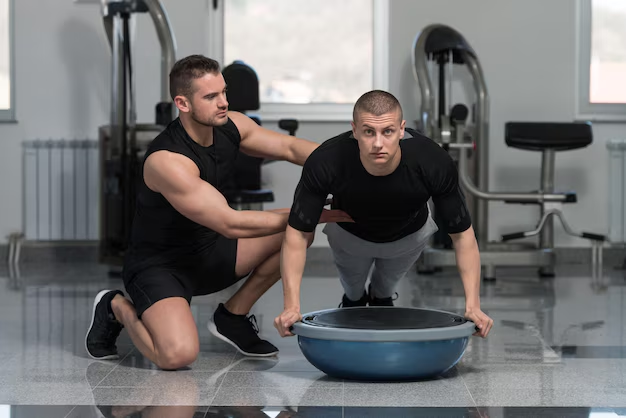
You’ll see squats that teach proper hip movement. Lunges that challenge balance. Push and pull exercises that protect the shoulders. Rotational movements that keep the spine responsive.
Each exercise answers a real-life need.
Progression is slow on purpose. Control comes before load. Confidence comes before speed. This is why functional training works for beginners and experienced athletes alike. Your body adapts without feeling overwhelmed.
Functional Strength Training vs Traditional Strength Training
Functional strength training doesn’t replace traditional lifting. It complements it. It makes strength usable, not just measurable.
Why Functional Training Supports Long-Term Fitness
Long-term fitness isn’t about pushing harder every year. It’s about staying consistent without breaking down.
Functional training supports longevity by adapting to your body. As mobility improves, strength builds. As strength builds, complexity increases. Nothing is rushed.
This approach pairs naturally with holistic fitness, customized programs, and beginner-friendly training that values safety. It’s one of the reasons people stick with it longer.
At Retro Fit Studio, functional training forms the foundation because movement quality determines how long you can stay active.
Closing Thought
Injury-free fitness isn’t about avoiding effort. It’s about choosing effort that respects your body.
Functional training teaches you how to move with confidence again. Over time, strength feels calmer. Movements feel familiar. Daily life stops feeling like a risk.
That’s the kind of progress that stays with you.
Tired of restarting fitness after setbacks?
Build strength that your body can rely on long-term.
Retro Fit Studio trains movement that lasts.FAQs
1. What are functional training benefits?
Functional training improves balance, joint stability, coordination, and reduces the risk of everyday injuries.
2. What is functional fitness best for?
It supports daily movement, athletic performance, and long-term physical health.
3. Are functional training exercises suitable for beginners?
Yes. They scale easily and emphasize control, making them safe for beginners.
4. How does functional strength training differ from bodybuilding?
It focuses on movement patterns and coordination rather than muscle size alone.
5. How often should functional training be done?
Most people benefit from two to four sessions per week, depending on recovery.